Facioscapulohumeral Muscular Dystrophy Market Size in the 7MM is projected to grow at a significant CAGR over the forecast period of 2026-2036 | DelveInsight
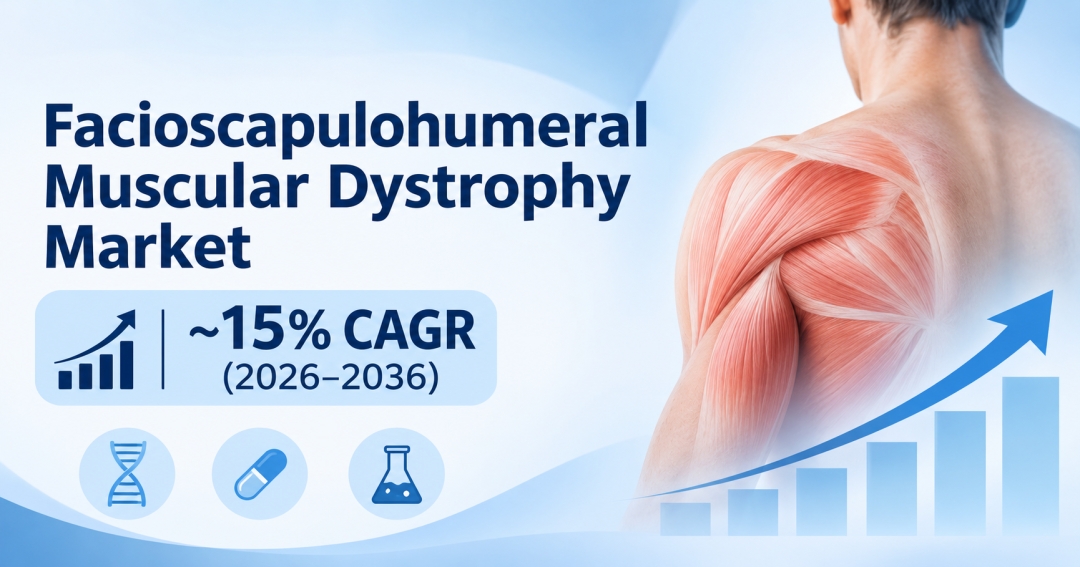
(Albany, US), November 05, 2026 – DelveInsight’s ‘Facioscapulohumeral Muscular Dystrophy (FSHD) Market Insights, Epidemiology and Market Forecast – 2036’ report delivers an in-depth understanding of FSHD, historical and forecasted epidemiology, as well as the facioscapulohumeral muscular dystrophy market trends in the United States, EU4 (Germany, Spain, Italy, and France) and the United Kingdom, and Japan.
Explore the intricate details of the Facioscapulohumeral Muscular Dystrophy Market Report @ Facioscapulohumeral Muscular Dystrophy Market
Key Takeaways from the Facioscapulohumeral Muscular Dystrophy Market Report
-
In October 2026, Epicrispr Biotechnologies announced positive six-month clinical data from its Phase I/II trial of EPI-321, with upper-body quantitative muscle testing improving by 4.1% compared with a 0.3% decline in the external comparator group.
-
In September 2026, Satellos Bioscience received FDA clearance of its IND application for forazapadin, with a Phase II trial planned for the fourth quarter of 2026.
-
In September 2026, Scholar Rock announced that the FDA granted Fast Track and Orphan Drug designations to apitegromab for FSHD, and dosing commenced in its Phase II FORGE trial.
-
In July 2026, Dyne Therapeutics announced FDA clearance of its IND application for DYNE-302, enabling a Phase I trial in patients with FSHD.
-
In March 2026, Sarepta Therapeutics announced the first clinical results from its Phase I/II study of SRP-1001 (formerly ARO-DUX4) for FSHD type 1.
-
In February 2026, Novartis completed its approximately US$12 billion acquisition of Avidity Biosciences, adding del-brax to its portfolio.
-
According to DelveInsight’s analysis, the facioscapulohumeral muscular dystrophy (FSHD) market size was found to be ~USD 600 million in the 7MM in 2025.
-
The FSHD market is projected to grow at a CAGR of ~15% during 2026-2036.
-
The United States captured the largest FSHD market size, at ~USD 600 million in 2025.
-
In the US, there were ~79,700 prevalent cases of FSHD in 2025, which are expected to increase further by 2036.
-
FSHD is the second most common adult-onset muscular dystrophy worldwide, and about 80% of people with the FSHD genotype will develop symptoms.
-
There are no approved disease-modifying therapies for FSHD, and treatment focuses on symptomatic and supportive care.
-
The leading FSHD companies include Novartis (Avidity Biosciences), Arrowhead Pharmaceuticals, Scholar Rock, Epicrispr Biotechnologies, Restem, Modalis Therapeutics, and others.
-
Promising FSHD therapies include Delpacibart braxlosiran (del-brax), ARO-DUX4, Apitegromab, EPI-321, Restem-L, MDL-103, and others.
Get a Free sample for the Facioscapulohumeral Muscular Dystrophy (FSHD) Market Forecast, Size & Share Analysis Report @ Muscle Wasting Disorders Market
Facioscapulohumeral Muscular Dystrophy Overview
Facioscapulohumeral Muscular Dystrophy (FSHD) is a genetic muscle disorder characterised by progressive weakening of the facial, shoulder, and upper arm muscles. It is one of the most common forms of muscular dystrophy, with symptoms often beginning in adolescence or early adulthood, though early-onset cases can occur in childhood. FSHD is caused by genetic changes that lead to inappropriate activation of the DUX4 gene, resulting in muscle damage over time. Disease progression is highly variable, ranging from mild muscle weakness to significant physical disability, and about 20% of patients eventually lose the ability to stand and walk. Diagnosis is based on clinical evaluation, medical and family history, and characteristic patterns of muscle weakness, supported by blood tests (CK and aldolase levels), neurological examinations, and sometimes a muscle biopsy to rule out other causes. A definitive diagnosis is made through genetic testing, which identifies FSHD Type 1 or Type 2.
Facioscapulohumeral Muscular Dystrophy Epidemiology Segmentation in the 7MM
-
Total Prevalent Cases of FSHD
-
Total Diagnosed Prevalent Cases of FSHD
-
Type-specific Diagnosed Prevalent Cases of FSHD
-
Gender-specific Diagnosed Prevalent Cases of FSHD
-
Age-specific Diagnosed Prevalent Cases of FSHD
-
Severity-specific Diagnosed Prevalent Cases of FSHD
-
Total Treated Cases of FSHD
Download the report to understand which factors are driving FSHD prevalence trends @ FSHD Prevalence
Facioscapulohumeral Muscular Dystrophy Epidemiology Key Findings
-
In 2025, among the 7MM, the US accounted for approximately 45% of total cases, which are expected to increase by 2036.
-
In 2025, among the age-specific cases of FSHD in the 7MM, the highest cases were in patients aged 50 years and above, while the lowest were in those below 18.
-
In 2025, there were nearly 16,000 cases of FSHD1, with FSHD1 accounting for approximately 95% of cases in the US, significantly higher than FSHD2.
-
The prevalence of FSHD is estimated at approximately 1 in 8,000 to 1 in 15,000 in the US and about 1 in 20,000 in both Italy and the UK.
-
FSHD involves over 870,000 people worldwide, with over 20 FSHD national registries.
-
In the US, the highest proportion of FSHD cases is in the most severe category (severity score 7 to 10) at ~40%, followed by 4 to 6 severity and then 1 to 3 severity, while the lowest proportion is seen in score 0 cases.
-
In the US, FSHD cases are distributed almost equally between males and females, with a slight predominance in males.
Approved Therapies for Facioscapulohumeral Muscular Dystrophy
Currently, there are no approved disease-modifying therapies for FSHD. Treatment focuses on managing symptoms and improving quality of life. Care typically includes physical therapy to maintain muscle strength and mobility and reduce contractures, along with occupational therapy and assistive devices such as braces or mobility aids. Pain management and tailored exercise programs may also be recommended, and in selected cases, surgical interventions such as scapular fixation may be considered for severe complications. However, these approaches do not halt disease progression, highlighting a significant unmet need.
Facioscapulohumeral Muscular Dystrophy Pipeline Analysis
-
Delpacibart braxlosiran (del-brax): Novartis (Avidity Biosciences)
Del-brax is designed to treat the underlying cause of FSHD, which is caused by the abnormal expression of the double homeobox 4 (DUX4) gene. It is in development in the Phase I/II FORTITUDE trial, the Phase II FORTITUDE-OLE trial, and the Phase III FORTITUDE-3 trial. The US FDA and the EMA have granted Orphan designation for del-brax, and the FDA has granted Fast Track designation. In June 2026, Novartis announced that the FORTITUDE study met its primary and key secondary biomarker endpoints. The Phase III readout and global regulatory submissions are anticipated in 2028.
-
EPI-321: Epicrispr Biotechnologies
EPI-321 is the first and only epigenetic editing therapy to receive IND authorisation within the U.S. and is being evaluated in a first-in-human Phase I/II trial. It has received FDA Fast Track, Orphan Drug, and Rare Pediatric Disease designations for FSHD. Designed to suppress pathogenic gene activity without cutting DNA, EPI-321 targets the root cause of FSHD and has the potential to be a one-time, disease-modifying therapy.
Discover more about therapies set to grab Major Facioscapulohumeral Muscular Dystrophy Market Share @ US Fibromuscular Dysplasia Market
Facioscapulohumeral Muscular Dystrophy Market Outlook
FSHD is a progressive and genetically driven muscle disorder marked by gradual and often asymmetric muscle weakness, with a “stuttering progression pattern” of stability followed by rapid decline. With no approved disease-modifying therapies, the market is anticipated to expand due to improved diagnosis, increasing awareness, and rising healthcare investment, alongside advancements in genetic, RNA-based, and gene-editing therapies targeting DUX4 expression. The launch of first-in-class therapies, improved diagnostic approaches, and increasing disease awareness are expected to drive steady growth in the 7MM FSHD market from 2022 to 2036. The US leads in revenue, while Europe and Japan demonstrate steady growth, supported by improved diagnosis rates and gradual adoption of novel therapies and personalised treatment strategies.
Facioscapulohumeral Muscular Dystrophy Market Drivers
-
Rising FSHD prevalence, supported by improved diagnostic capabilities and greater disease awareness
-
Rising opportunities in targeted and genetic therapies, including gene-targeting, RNA-based approaches, and muscle modulation
-
Emerging competitive landscape, with drugs in clinical trials such as del-brax, ARO-DUX4, and apitegromab
Facioscapulohumeral Muscular Dystrophy Market Barriers
-
High costs of emerging therapies
-
Lack of effective disease-modifying therapies
-
Delays in diagnosis and limited treatment options for muscle weakness, fatigue, and functional impairment
-
Inadequate management strategies for pain and long-term disability
To know more about Facioscapulohumeral Muscular Dystrophy Companies working in the treatment market, visit @ Fibrous Dysplasia Market
Scope of the Facioscapulohumeral Muscular Dystrophy Market Report
-
Coverage: 7MM
-
Study Period: 2022-2036
-
Forecast Period: 2026-2036
-
Facioscapulohumeral Muscular Dystrophy Companies: Novartis (Avidity Biosciences), Arrowhead Pharmaceuticals, Scholar Rock, Epicrispr Biotechnologies, Restem, Modalis Therapeutics, and others.
-
Facioscapulohumeral Muscular Dystrophy Therapies: Delpacibart braxlosiran (del-brax), ARO-DUX4, Apitegromab, EPI-321, Restem-L, MDL-103, and others.
-
Facioscapulohumeral Muscular Dystrophy Market Dynamics: market drivers and market barriers
-
Facioscapulohumeral Muscular Dystrophy Competitive Intelligence Analysis: SWOT Analysis, Conjoint Analysis
-
Facioscapulohumeral Muscular Dystrophy Unmet Needs, KOL Views, Reimbursement
Table of Contents
-
Key Insights
-
Report Introduction
-
Executive Summary
-
Facioscapulohumeral Muscular Dystrophy (FSHD) Market Overview at a Glance
-
Epidemiology and Market Forecast Methodology of Facioscapulohumeral Muscular Dystrophy (FSHD)
-
Key Events
-
Disease Background and Overview of Facioscapulohumeral Muscular Dystrophy (FSHD)
-
Treatment and Management
-
Epidemiology and Patient Population of Facioscapulohumeral Muscular Dystrophy (FSHD) in the 7MM
-
Patient Journey
-
Emerging Therapies
-
Facioscapulohumeral Muscular Dystrophy (FSHD): 7MM Analysis
-
Unmet Needs of Facioscapulohumeral Muscular Dystrophy (FSHD)
-
SWOT Analysis of Facioscapulohumeral Muscular Dystrophy (FSHD)
-
KOL Views of Facioscapulohumeral Muscular Dystrophy (FSHD)
-
Market Access and Reimbursement
-
Appendix
-
DelveInsight Capabilities
-
Disclaimer
-
About DelveInsight
Media Contact
Company Name: DelveInsight Business Research LLP
Contact Person: Abhishek kumar
Email: Send Email
Phone: +19193216187
Address:304 S. Jones Blvd #2432
City: Albany
State: New York
Country: United States
Website: https://www.delveinsight.com/report-store/facioscapulohumeral-muscular-dystrophy-market


