AI and 3D Art Visionary Yiwen Wu Debuts Revolutionary Systems for High‑Fidelity Visual Content Production
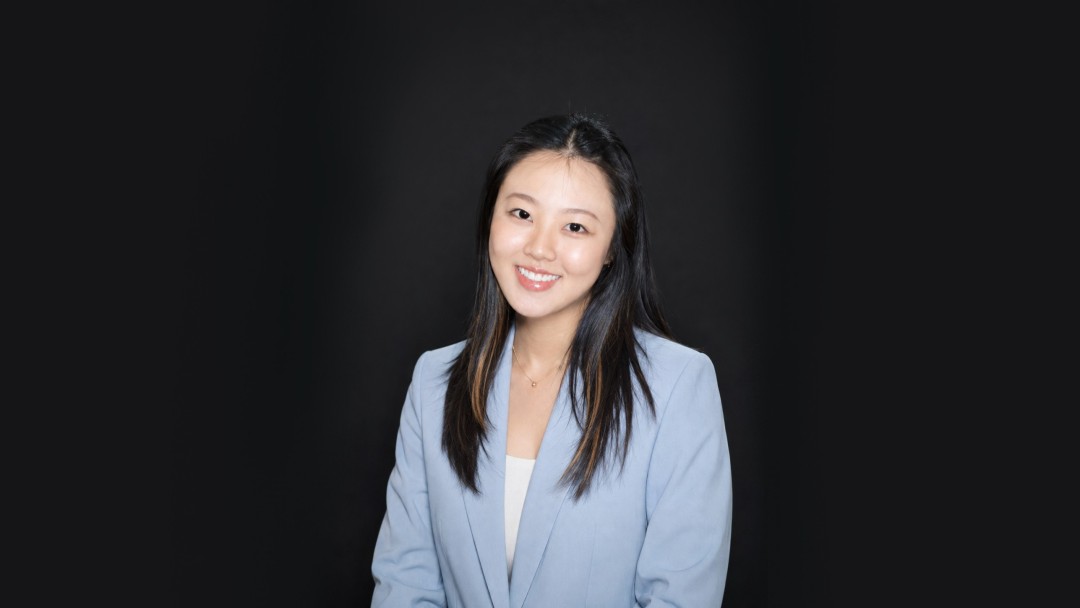
New York – September 1, 2026 – At the dynamic crossroads of digital creativity and artificial intelligence, a singular figure is reshaping how 3D visual content is conceived, rendered, and brought to life. Yiwen Wu, an artist-innovator who fuses generative AI with 3D visual arts, today unveiled two transformative technology systems and a foundational academic paper that together promise to redefine production pipelines across film, gaming, virtual reality, and digital marketing.
Wu’s work systematically integrates cutting-edge techniques—neural radiance fields (NeRF), 3D Gaussian splatting, and diffusion-based generation—into end-to-end workflows. The result is a pair of proprietary platforms that move high‑fidelity 3D content creation from labor‑intensive manual modeling to intelligent, human‑collaborative processes.
Two Systems That Redefine the Creative Pipeline
Wu’s flagship development is the Deep Learning-Based 3D Digital Art Generation and Intelligent Rendering System, which tackles the twin bottlenecks of generation and rendering. Traditional 3D art requires artists to hand‑craft models, adjust materials, and fine‑tune lighting—a costly and time‑consuming cycle. Wu’s system replaces that grind with deep‑learning models that convert creative inputs into production‑ready 3D assets, while an embedded intelligent rendering engine accelerates the journey from concept to final output. “My goal is to systematically apply generative AI to the entire high-fidelity 3D production pipeline,” Wu explained, “so that technology becomes a true enabler, not a barrier, for artistic vision.”
Complementing that is the AI-Based Automatic 3D Visual Content Generation and Interactive Design Platform, which extends the paradigm from pure generation to real-time co-creation. This platform emphasizes a human-AI partnership: the system handles the heavy computational lifting of automatic content creation, while artists interactively tweak, refine, and reimagine the output on the fly. By lowering the technical threshold, it empowers both novice creators and seasoned professionals to focus on storytelling and aesthetics rather than repetitive technical chores.
Together, the two systems form a closed loop—from intelligent generation to intelligent rendering, and from automated production to interactive design—directly addressing the digital creative industry’s most persistent pain points: soaring demand for 3D assets versus traditional, resource-heavy methods.
Academic Foundation: A Theoretical Blueprint
Parallel to her engineering efforts, Wu has contributed a scholarly paper titled Creative Innovation Research on the Integration of Artificial Intelligence Technology and 3D Visual Art. Rather than merely cataloging tools, the paper examines how AI is altering the ontology of creative work. It analyzes generative AI’s roles in image synthesis, processing, and assisted design, and argues that artists are evolving from hands‑on executors to high‑level directors—curating intent while algorithms handle physical plausibility and spatial semantics.
“This isn’t just about faster rendering,” Wu noted. “It’s about reimagining the artist’s relationship with the medium. When AI can interpret 3D space and generate photorealistic scenes from text, the creative process becomes more strategic and expressive.” The paper serves as both a theoretical anchor and a roadmap that informs the design philosophy behind her two systems.
Cutting-Edge Technical Core
Yiwen Wu’s choices in underlying technologies align her research with the critical development trajectory of 3D vision. Neural Radiance Fields (NeRF) leverage deep networks to learn continuous radiance fields from sparse 2D images, enabling the synthesis of reasonably realistic novel views. Building on this, 3D Gaussian Splatting represents scenes with anisotropic Gaussian distributions, demonstrating notable advantages in training speed and real‑time rendering efficiency. Wu is dedicated to translating these laboratory breakthroughs into practical artistic tools, with a particular focus on enhancing controllability and interactivity—two factors often regarded as the dividing line between creative tools and pure technical demonstrations. Her framework not only generates images but also allows artists to continuously guide, adjust, and refine outputs within an intuitive workflow.
Industry Impact and a Human-Centric Philosophy
The digital creative sector faces an exponential appetite for 3D assets, yet conventional production remains expensive and slow. Wu’s solutions directly counter that imbalance by offloading repetitive tasks to AI, freeing artists to concentrate on originality and emotional resonance. Crucially, she advocates for augmentation, not replacement: “AI is not here to replace artists; it’s here to amplify their capabilities.” This human-centric stance is baked into both platforms, which deliberately balance automation with user agency—giving creators the final say at every stage.
Looking Ahead
Wu envisions a future where 3D visual content creation becomes more democratized—where even those without deep technical training can produce compelling work, while seasoned artists explore entirely new aesthetic territories. She intends to continue pushing generative AI and neural rendering from academic journals into everyday production environments, bridging the gap between research and real-world creative practice.
From her dual-system architecture to her scholarly contributions, Yiwen Wu embodies a rare synthesis of technical rigor and artistic intuition. In an era when digital creativity and AI are converging at breakneck speed, her work stands as a compelling proof point: when technological power meets artistic vision, the result is not mere efficiency, but a profound expansion of what is creatively possible.
About the Systems
The Deep Learning-Based 3D Digital Art Generation and Intelligent Rendering System and the AI-Based Automatic 3D Visual Content Generation and Interactive Design Platform are proprietary innovations developed under Wu’s leadership, integrating state-of-the-art neural rendering and generative models for professional 3D content production.
About the Author
Yiwen Wu is a cross-disciplinary artist and researcher whose work lies at the intersection of artificial intelligence and 3D visual arts. She is dedicated to advancing human-AI collaboration in digital creativity.
(By Emily Chen)
Media Contact
Company Name: Yiwen Wu
Contact Person: Media Relations
Email: Send Email
Phone: 3016618031
City: New York City
Country: United States
Website: https://www.linkedin.com/in/tiffaanywu


