Iron Deficiency Anemia Market Size in the 7MM is projected to grow at a significant CAGR over the forecast period of 2026-2036 | DelveInsight
(Albany, US), November 03, 2026 – DelveInsight’s ‘Iron Deficiency Anemia (IDA) – Market Insights, Epidemiology and Market Forecast – 2036’ report delivers an in-depth understanding of Iron Deficiency Anemia, historical and forecasted epidemiology, as well as the iron deficiency anemia market trends in the United States, EU4 (Germany, Spain, Italy, and France) and the United Kingdom, and Japan.
Explore the intricate details of the Iron Deficiency Anemia Market Report @ Iron Deficiency Anemia Treatment Market Size
Key Takeaways from the Iron Deficiency Anemia Market Report
-
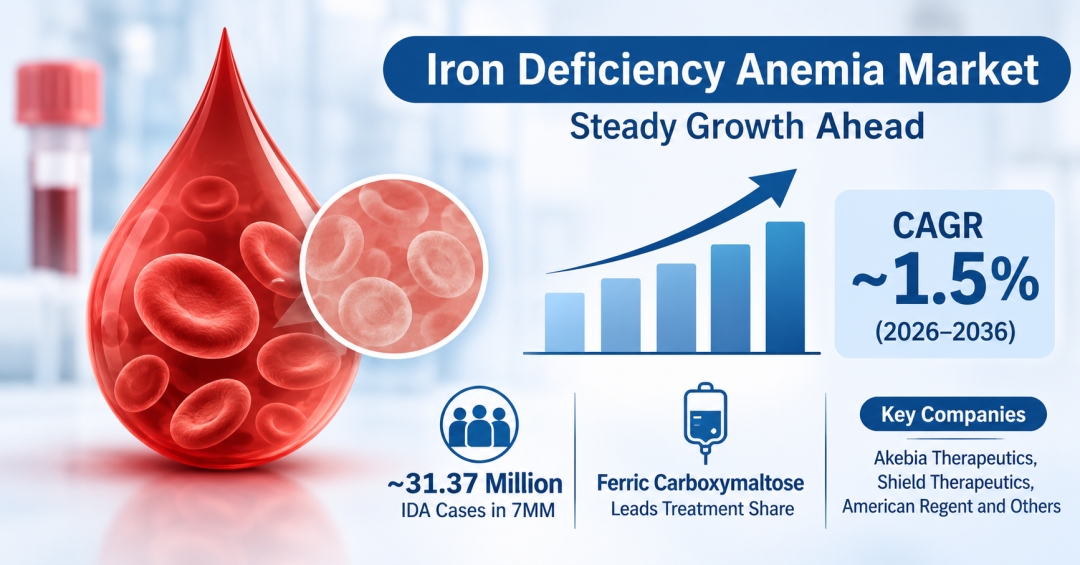
According to DelveInsight’s analysis, the iron deficiency anemia market size was found to be ~USD 1,600 million in the leading markets (the United States, the EU4, the United Kingdom, and Japan) in 2025.
-
The iron deficiency anemia treatment market is projected to grow at a CAGR of ~1.5% during 2026–2036.
-
The largest market size of IDA was captured by the United States, at ~USD 1,300 million in 2025, making the US anemia drugs market the leading contributor in the 7MM.
-
According to DelveInsight’s estimates, the total prevalent cases of IDA in the 7MM were approximately 31,370,000 in 2025.
-
A significant proportion of IDA burden is associated with comorbid conditions such as chronic kidney disease, cancer, chronic heart failure, inflammatory bowel disease, celiac disease, and women’s health-related factors, with chronic kidney disease contributing the largest share, highlighting the need for integrated disease management, early screening, and targeted treatment approaches to reduce complications and improve patient outcomes.
-
In the IDA market across the 7MM, ferric carboxymaltose (INJECTAFER/FERINJECT) accounts for the largest share among treatment options, driven by its widespread use in moderate-to-severe patients requiring rapid and effective iron repletion.
-
The current anemia market is characterized by widespread use of low-cost Oral Ferrous Products (OFPs) such as ferrous sulphate, ferrous fumarate, and ferrous gluconate, alongside a growing shift toward higher-cost advanced therapies including FERACCRU/ACCRUFER, AURYXIA/RIONA, and intravenous iron formulations like INJECTAFER/FERINJECT and MONOFER, driven by the need for improved efficacy, faster replenishment, and better tolerability in moderate-to-severe patients.
-
The IDA treatment landscape includes a broad range of marketed iron replacement therapies across oral and intravenous formulations, developed by leading pharmaceutical companies, including Daiichi Sankyo (INJECTAFER/FERINJECT), Pharmacosmos (MONOFERRIC), and Rockwell Medical (TRIFERIC), reflecting continued innovation and competition in the iron deficiency anemia therapy market, with a growing focus on improved safety, rapid iron repletion, and patient convenience.
-
The emerging IDA pipeline remains relatively limited, with IDAX (IHAT-02) (Nemysis) and MPB-1514 (IOP Injection) (MegaPro Biomedical) among the drugs being evaluated in clinical trials.
-
The leading Iron Deficiency Anemia Companies include Akebia Therapeutics, Shield Therapeutics, American Regent, Zeria, Pharmacosmos, MegaPro Biomedical, Nemysis, and others.
-
Promising Iron Deficiency Anemia Therapies include Ferric maltol (FERACCRU/ACCRUFER), Ferric citrate (AURYXIA/RIONA), Ferric carboxymaltose (INJECTAFER/FERINJECT), Ferric derisomaltose (MONOFER), Ferric pyrophosphate citrate (TRIFERIC), IDAX (IHAT-02), and others.
Get a Free sample for the Iron Deficiency Anemia Therapy Market Forecast, Size & Share Analysis Report @ Iron Deficiency Anemia Therapy Market
Iron Deficiency Anemia Overview
Iron Deficiency Anemia (IDA) is the most common form of anemia, occurring when low iron levels reduce hemoglobin production and impair oxygen transport in the body. It can range from mild to severe, with symptoms such as fatigue, weakness, and shortness of breath, especially in advanced stages. IDA is mainly caused by poor iron intake, blood loss, or reduced absorption. Diagnosis is based on blood tests, and treatment typically involves oral or intravenous iron supplementation, with transfusion required in severe cases. IDA is diagnosed through physical examination and blood tests, often detected during routine checkups. A complete blood count (CBC) is the primary test, showing low hemoglobin, hematocrit, and smaller red blood cells. Additional tests such as serum iron, ferritin, and total iron-binding capacity (TIBC) confirm iron deficiency. If needed, further investigations like stool tests or endoscopy are done to identify underlying causes such as internal bleeding.
Iron Deficiency Anemia Epidemiology Segmentation in the 7MM
-
Total Prevalent Cases of Iron Deficiency Anemia
-
Total Diagnosed Prevalent Cases of Iron Deficiency Anemia
-
Gender-Specific Diagnosed Prevalent Cases of Iron Deficiency Anemia
-
Pathology-Specific Diagnosed Prevalent Cases of Iron Deficiency Anemia
-
Severity-specific Diagnosed Prevalent Cases of Iron Deficiency Anemia
-
Total Treated Cases of Iron Deficiency Anemia
Download the report to understand which factors are driving Iron Deficiency Anemia Epidemiology trends @ Anemia Market
Iron Deficiency Anemia Epidemiology Key Findings
-
According to DelveInsight’s estimates, the total prevalent cases of IDA in the 7MM were approximately 31,370,000 in 2025.
-
In the US, there were ~9,639,000 prevalent cases of IDA in 2025.
-
Among the EU4, Germany accounted for the highest number of prevalent cases of IDA, followed by Spain, whereas France accounted for the lowest number of cases in 2025.
-
The observed female predominance and earlier onset of IDA highlight the importance of gender-specific screening and early intervention strategies, particularly in recognizing susceptibility patterns and addressing disease at onset to prevent long-term complications.
-
The prevalence of anemia was 9.3% in the US population aged 2 years and older, with males having a lower prevalence of anemia than females.
Approved Therapies for Iron Deficiency Anemia
The marketed iron deficiency anemia treatment market comprises oral and intravenous iron replacement therapies, including the following key products:
-
Ferric Citrate (AURYXIA): Akebia Therapeutics – an oral, non-calcium, iron-based small molecule with a dual mechanism of action, initially approved by the U.S. FDA in 2014 for hyperphosphatemia in chronic kidney disease and later in 2017 for the treatment of adult patients with IDA. By providing bioavailable iron while also acting as a phosphate binder, AURYXIA supports hemoglobin improvement and iron repletion, particularly in CKD patients. In Japan, it is marketed as RIONA by Japan Tobacco and Torii Pharmaceutical, with approval for IDA granted in 2021.
-
Ferric Maltol (FERACCRU/ACCRUFER): Shield Therapeutics – a novel oral iron therapy designed for patients with IDA who are intolerant to conventional oral ferrous products or seek an alternative to intravenous iron. Formulated as a stable ferric maltol complex containing 30 mg of iron, it enables targeted delivery and absorption in the duodenum while minimizing free iron–related gastrointestinal side effects, offering a convenient, well-tolerated, and non-invasive alternative to hospital-based IV therapies.
-
Ferric Derisomaltose (MONOFERRIC/MONOFER): Pharmacosmos – an intravenous iron replacement therapy indicated in adult patients who have intolerance to oral iron or have non-hemodialysis dependent CKD, marketed in Europe (2009), the US (2020), and Japan (2022).
In December 2025, the US FDA approved label expansion of ACCRUFER to include adolescents, now indicated for iron deficiency in patients ≥10 years. In March 2026, the CHMP issued a positive opinion to extend the indication of FERACCRU to adolescents, now indicated for iron deficiency in patients ≥12 years.
Iron Deficiency Anemia Pipeline Analysis
-
IDAX (IHAT-02): Nemysis
IDAX (IHAT-02), developed by Nemysis, is a novel oral iron formulation (IHAT) designed as a natural ferritin mimic, enabling efficient iron absorption as intact nanoparticles without requiring gastric solubilization. It closely replicates physiological iron uptake, improves iron deficiency markers, and minimizes gastrointestinal side effects. By preventing the release of free iron in the gut, it helps preserve the microbiome while maintaining normal iron homeostasis after absorption. IDAX is currently in Phase III development.
-
MPB-1514: MegaPro Biomedical
MPB-1514 is an intravenous, PEG-coated iron replacement therapy based on a PEGylated iron oxide nanoparticle, currently in Phase II development for IDA. MegaPro Biomedical had planned to advance the drug into Phase IIb; however, no recent updates have been reported, although the asset continues to be listed in the company’s pipeline.
Discover more about therapies set to grab Major Iron Deficiency Anemia Market Share @ Iron Deficiency Anemia Treatment Market Analysis
Iron Deficiency Anemia Market Outlook
The iron deficiency anemia market is undergoing a notable transformation, moving beyond traditional oral iron salts and conventional supplementation toward more advanced, targeted, and patient-friendly therapies. The growing adoption of novel formulations such as ferric maltol and innovative approaches like nanoparticle-based iron delivery systems (e.g., IHAT) reflects a shift toward improved absorption, reduced gastrointestinal side effects, and enhanced patient compliance. With the continued development of novel agents, including intravenous iron formulations such as ferric carboxymaltose and pipeline candidates targeting improved safety and efficacy profiles, the intravenous iron drug market is evolving similarly to other high-burden chronic conditions, where innovation drives broader therapeutic expansion. Regional market dynamics show the US leading in revenue, while Japan and EU markets demonstrate steady growth, reflecting increasing diagnosis rates, broader pediatric access, and rising adoption of novel mechanisms. The introduction of differentiated therapies, expanding treatment options across oral and intravenous segments, improved screening practices, and rising awareness, particularly among high-risk populations such as women and patients with chronic diseases, are expected to drive steady growth in the 7MM IDA market from 2022–2036, with significant commercial opportunities for both approved products and emerging pipeline candidates.
Iron Deficiency Anemia Market Drivers
-
Rising IDA incidence, particularly among females, with ~9,639,000 prevalent cases of IDA in the US in 2025
-
Rising opportunities in targeted iron therapies, supported by emerging evidence of improved efficacy and safety of novel iron formulations over conventional therapies
-
Emerging IDA competitive landscape with novel pipeline candidates such as IDAX (IHAT-02) and MPB-1514
-
Growing shift from conventional oral ferrous products toward advanced, better-tolerated therapies
-
Improved screening practices and rising awareness among high-risk populations such as women and patients with chronic diseases
Iron Deficiency Anemia Market Barriers
-
Issues with existing treatment options, including gastrointestinal side effects and poor adherence with conventional oral iron therapies
-
Challenges in accurate and timely diagnosis
-
Impact of IDA on patients’ quality of life (QoL)
-
Limited emerging pipeline, with few drugs in clinical trials
-
Higher cost of advanced therapies compared with low-cost oral ferrous products
Iron Deficiency Anemia Treatment Landscape
The primary goals of IDA treatment are to replenish iron stores, restore hemoglobin levels, alleviate symptoms such as fatigue and weakness, address underlying causes (e.g., blood loss or malabsorption), and prevent recurrence. Management is largely pharmacologic and follows a step-wise approach, with Oral Ferrous Products (OFPs) such as ferrous sulphate, ferrous fumarate, and ferrous gluconate used as first-line therapy due to their accessibility and cost-effectiveness, which keeps the ferrous fumarate market relevant within the broader anemia market. In patients with intolerance, poor absorption, or inadequate response, alternative oral agents such as FERACCRU/ACCRUFER and AURYXIA/RIONA may be considered. Intravenous iron formulations, including ferric carboxymaltose (INJECTAFER/FERINJECT) and ferric derisomaltose (MONOFER), are utilized for rapid repletion in moderate-to-severe cases or in those with chronic conditions such as chronic kidney disease or inflammatory disorders. Supportive strategies, including dietary modification and treatment of underlying etiologies, are essential to ensure sustained hematologic stability and reduce the risk of relapse.
To know more about Iron Deficiency Anemia Companies working in the treatment market, visit @ Iron Deficiency Anemia Market
Scope of the Iron Deficiency Anemia Market Report
-
Coverage- 7MM
-
Study Period- 2022-2036
-
Forecast Period- 2026-2036
-
Iron Deficiency Anemia Companies- Akebia Therapeutics, Shield Therapeutics, American Regent, Zeria, Pharmacosmos, MegaPro Biomedical, Nemysis, and others.
-
Iron Deficiency Anemia Therapies- Ferric maltol (FERACCRU/ACCRUFER), Ferric citrate (AURYXIA/RIONA), Ferric carboxymaltose (INJECTAFER/FERINJECT), Ferric derisomaltose (MONOFER), Ferric pyrophosphate citrate (TRIFERIC), IDAX (IHAT-02), and others.
-
Iron Deficiency Anemia Market Dynamics: Iron Deficiency Anemia market drivers and market barriers
-
Iron Deficiency Anemia Competitive Intelligence Analysis: SWOT Analysis, Conjoint Analysis
-
Iron Deficiency Anemia Unmet Needs, KOL Views, Reimbursement
Table of Contents
-
Key Insights
-
Report Introduction
-
Executive Summary
-
Key Events
-
Epidemiology and Market Forecast Methodology of Iron Deficiency Anemia (IDA)
-
Iron Deficiency Anemia (IDA) Market Overview at a Glance
-
Disease Background and Overview of Iron Deficiency Anemia (IDA)
-
Treatment
-
Epidemiology and Patient Population of Iron Deficiency Anemia (IDA)
-
Patient Journey of Iron Deficiency Anemia (IDA)
-
Marketed Therapies
-
Emerging Drugs
-
Iron Deficiency Anemia (IDA): 7MM Analysis
-
Unmet Needs of Iron Deficiency Anemia (IDA)
-
SWOT Analysis of Iron Deficiency Anemia (IDA)
-
KOL Views of Iron Deficiency Anemia (IDA)
-
Market Access and Reimbursement of Iron Deficiency Anemia (IDA)
-
Appendix
-
DelveInsight Capabilities
-
Disclaimer
-
About DelveInsight
Media Contact
Company Name: DelveInsight Business Research LLP
Contact Person: Abhishek kumar
Email: Send Email
Phone: +19193216187
Address:304 S. Jones Blvd #2432
City: Albany
State: New York
Country: United States
Website: https://www.delveinsight.com/report-store/iron-deficiency-anemia-market


