Blind Rivets and Rivet Nuts Offer Different Solutions for One-Side Assembly
Tianjin, China-November 5, 2026
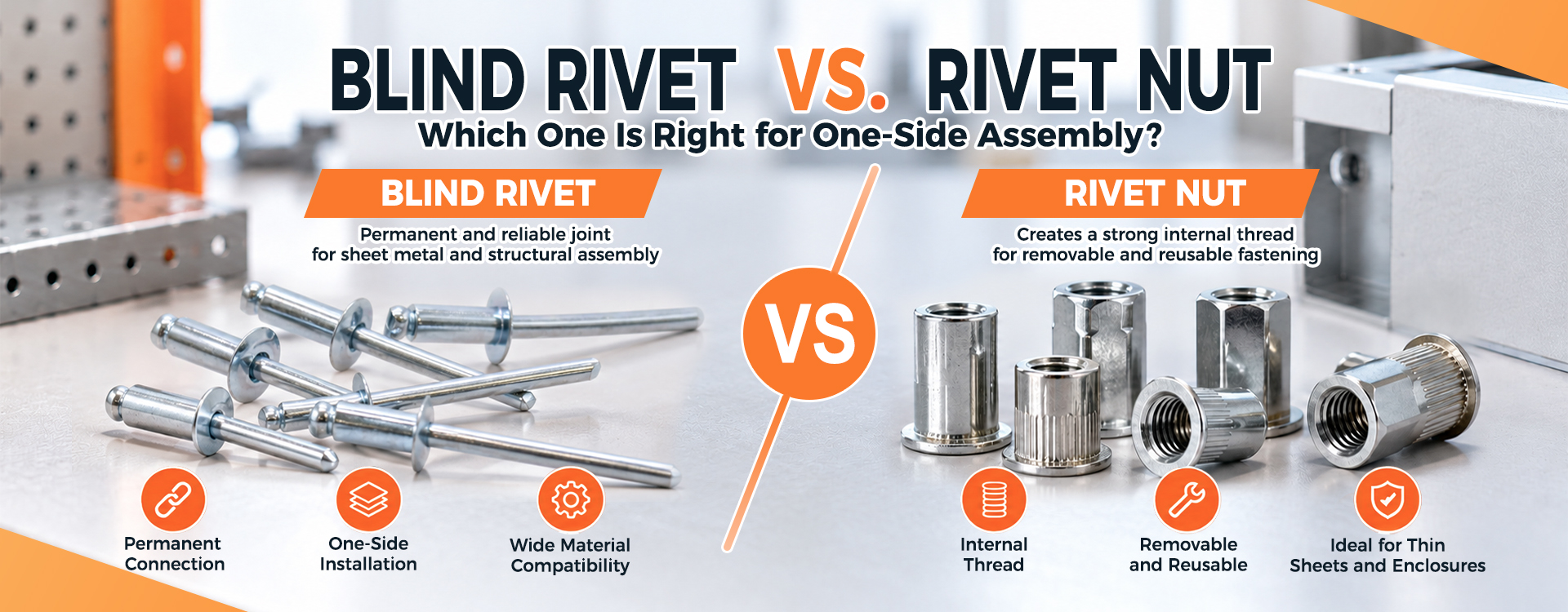
Can’t get to the back side of your assembly? You’re probably weighing blind rivets vs rivet nuts. Both install from one side. Both are staples of sheet metal work. But the joints they leave behind? Night and day for your project’s long-term cost and serviceability.Over 15 years running fastener production lines, we’ve seen buyers mix these two up more than any other fastener pair. Pick the wrong one, and you’re either drilling out permanent rivets for every service call, or paying a premium for threads you’ll never actually use.Blind rivets create a permanent clamp between the parts. As soon as the rivet nut is applied, a permanent threaded insert is formed, allowing bolts or machine screws to be quickly and easily installed and removed. There’s one difference that ripples through everything: tooling, vibration performance, coating selection, packaging, and even the information you need to receive an accurate quote. Rule number one: pick the joint type first. Then pick the fastener.
Start With the Joint You Need to Leave Behind
A Blind Rivet Leaves a Permanent Clamp
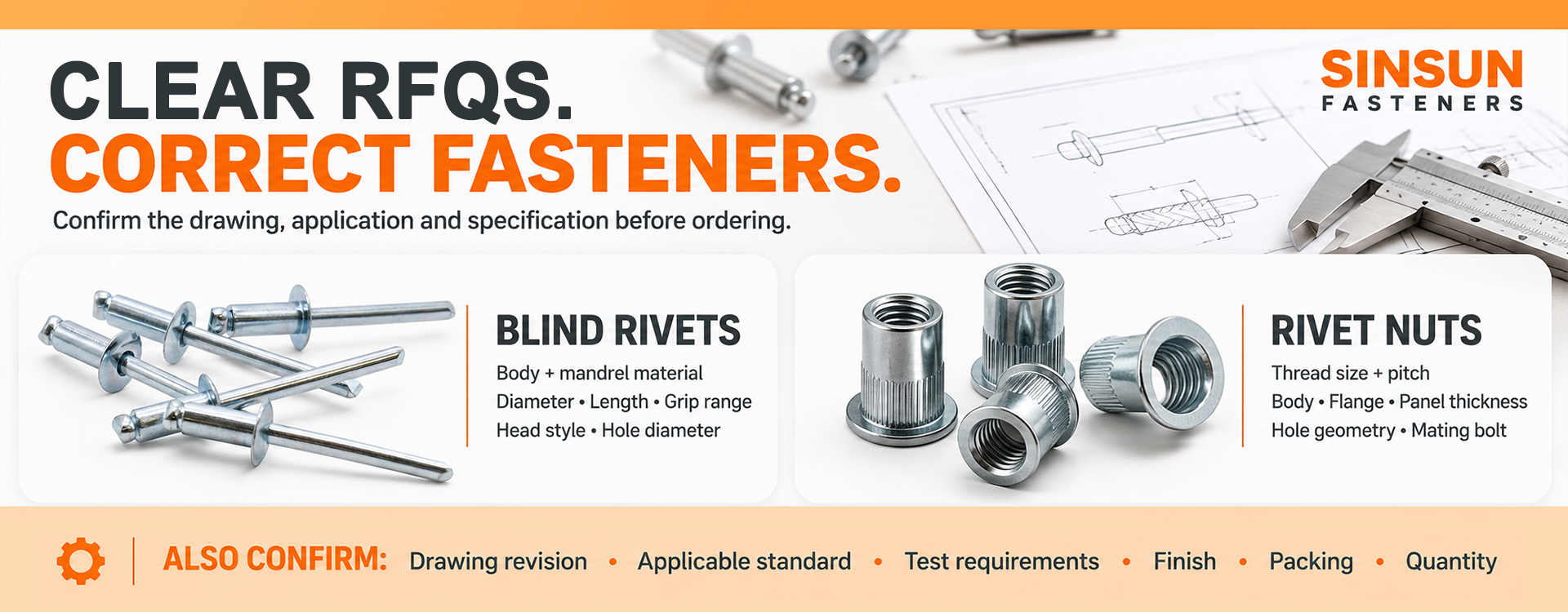
Blind rivets consist of two parts, the rivet body and the mandrel. As the rivet is installed, the tool pulls the mandrel tight and flares the exposed end of the rivet shaft. It holds the materials tightly, breaking the mandrel cleanly at its engineered break point. Easy. Quick. Permanent. No extra parts, no retightening. Just put it together, and then move on to the next one. Blind rivets are used when two or more components need to be joined and held in place—with no requirement for subsequent disassembly. Common applications include metal cladding, HVAC ductwork, gutters, brackets, appliance panels, signage, and light- to medium-duty sheet metal assemblies.
We provide a practical and economical solution for sheet-to-sheet fastening with open type aluminium pop blind rivets. If you want to be more exact, it will depend on the size of the body, the grip range, the type of head, the combination of materials in the body and mandrel, the size of the hole, and whether you need shear or tensile performance. In our production floor, we see ordering by diameter every week as the #1 mistake we make in purchasing. Typically, aluminum/steel round-head rivets and all-stainless-steel closed-end rivets are designed for the same nominal hole diameter; however, they differ in terms of corrosion resistance, installation force requirements, and the long-term reliability of the joint.
A Rivet Nut Leaves a Permanent Thread
A rivet nut – also called a blind nut, rivnut, or threaded insert – installs from one side and deforms behind the panel to lock in place. The rivet nut itself stays permanently fixed in the material. The mating bolt or screw that goes into it? That can be removed and reinstalled as many times as needed for service.
A blind rivet clamps sheets together. A rivet nut creates a solid, usable female thread in sheet metal, tubes, closed profiles, and any other area where a conventional nut simply can’t be reached. The insert is permanent; the component attached to it doesn’t have to be.
Blind Rivet vs Rivet Nut: The Selection Points Most Buyers Miss
Let’s break it down by what you actually need the joint to do:
| Requirement | Better Choice | Why |
| Permanent sheet-to-sheet joint | Blind rivet | Fast installation with no extra mating bolt required |
| Removable cover, bracket, or service panel | Rivet nut | Creates a reusable thread for repeated assembly and removal |
| One-side access only | Either | Both are purpose-built for blind-side installation |
| Thin material with no room for tapping | Rivet nut | Creates a strong thread where sheet thickness can’t support standard tapping |
| High-volume permanent assembly | Blind rivet | Fewer parts, faster setting process, lower per-unit installed cost |
| Future maintenance or replacement | Rivet nut | Bolt removes easily – no drilling out the insert required |
| Watertight joint | Sealed blind rivet or sealed rivet-nut design | Always verify the full assembly, not just the fastener alone |
Here’s the trade-off most buyers gloss over. Blind rivets are usually faster and lower in installed part count. Rivet nuts add a separate screw or bolt, plus a controlled tightening step during final assembly. In return, you get serviceability.
So how do you select in vibration-prone applications? Don’t choose either out of habit. A blind rivet, when properly installed, forms a strong permanent connection. Rivet nuts, however, require the use of appropriate screws, clamping forces and locking measures even in the presence of vibration – this may mean using pre-tensioned nuts, threadlockers, locking washers or screws with built-in locking features. There is no one answer fits all.
APPLICATIONS OF RIVET NUTS: WHEN REMOVABLE THREADS ARE ESSENTIAL
In situations where space is limited but the final assembly must be disassembled later, riveted nuts are the preferred solution. Typical applications include: electrical cabinets, machine guards, transportation equipment, metal enclosures, HVAC housings, solar equipment enclosures, furniture frames, and automotive body panels.
Applications of Rivet Nuts: Thin Sheets, Tubing, and Maintenance Panels
Use our flat-head threaded insert rivet nuts when panels are too thin to form reliable internal threads, or when the back side of tubing or box-section profiles is completely inaccessible.
Round-body rivet nuts work for most standard punched holes. Knurled bodies improve resistance to spin-out in softer materials. Hex-body rivet nuts are often selected where higher torque resistance is needed – provided the mating hole is correctly punched or machined. Closed-end types are worth considering if the back side needs extra protection from moisture or contamination.
Here’s a real, anonymized project example from last year. A German solar distributor needed removable access covers on powder-coated steel inverter enclosures. Their first proposal was blind rivets, since installation could only be done from one side. That would have been fast to install, but every service visit would require drilling out each rivet – damaging the powder coat, wasting technician time, and risking panel damage. The better design choice was an M5 steel rivet nut with a matching removable screw. We still had to confirm final thread size, coating, grip range, and installation torque against their actual panel thickness, but the core choice cut their average service time by roughly 60%.
This is a real-world selection example, not a published load-rating claim. Always get engineering approval for structural or safety-critical applications.
And that’s the real question at the heart of blind rivet vs rivet nut: will this assembly ever need to come apart?
Drawings, Standards, and RFQ Details That Prevent Wrong Orders
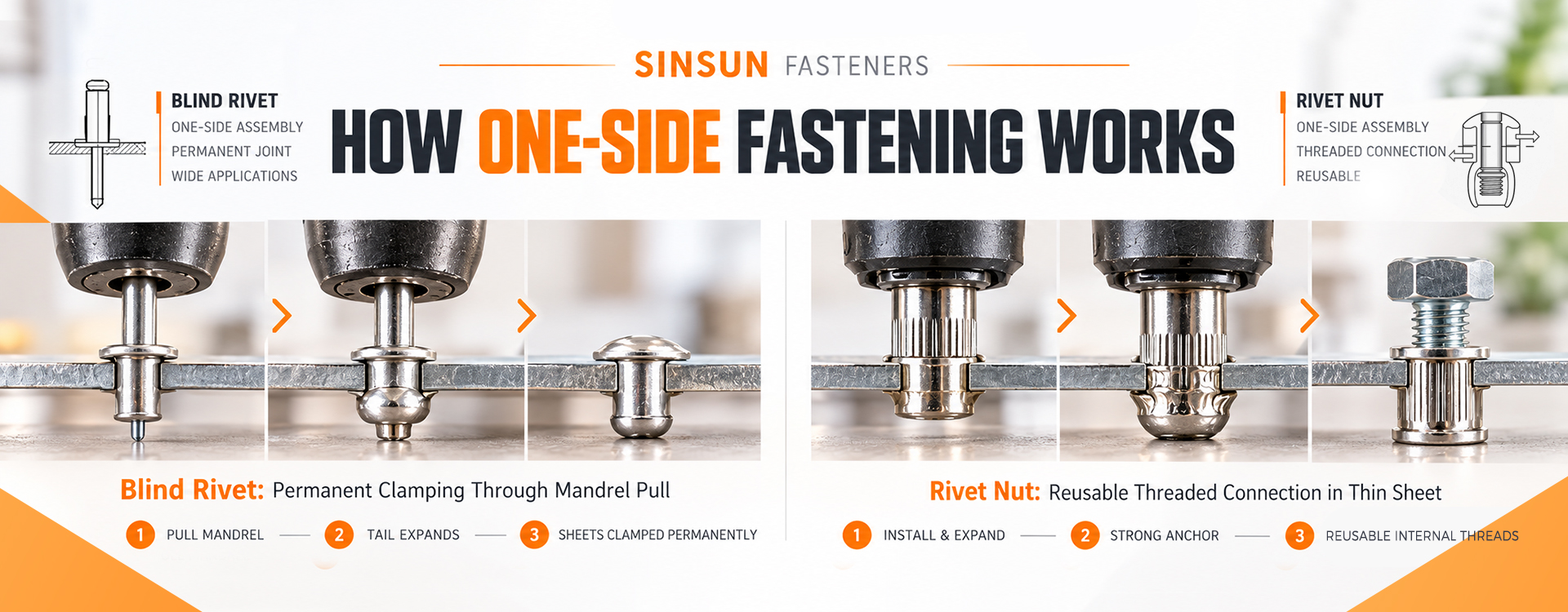
Nothing slows down the quoting process or increases the risk of placing the wrong order more than a vague request for quotation. If the request simply states “blind rivets” or “M6 rivet nuts,” it will inevitably lead to a lengthy back-and-forth communication cycle. Worse still, while the parts you receive may fit into the holes, they may fail during actual use.
For blind rivets, ISO 14588 defines standard terminology, while ISO 14589 covers mechanical testing methods. ISO 15977 is one common product-specific standard for open-end, break-pull blind rivets with an aluminium-alloy body and steel mandrel.
Please note that DIN standards require that your drawings cross-check with the required head type, material combination, diameter, clamping range, and current customer drawings if your drawings reference DIN 7337.Never use DIN 933 or ISO 4017 as specifications for blind rivets, as these standards apply to threaded hex-head fasteners, not rivets. Furthermore, DIN 7338 is not a general standard for rivet nuts, but rather one specifically for rivets used in brake and clutch linings. We frequently see confusion between similar standards.
What to include in your RFQ
For blind rivets, specify:
●Body and mandrel material●Diameter, body length, and grip range●Head style: dome, large flange, countersunk, or sealed●Hole diameter and base materials being joined●Finish, colour, corrosion requirements, and packing method●Required shear and tensile test data
For rivet nut applications, add these details:
●Internal thread size and pitch●Open-end or closed-end design●Body style: round, knurled, or hex●Flange type●Panel thickness and grip range●Hole geometry and base material●Torque-out, push-out, pull-out, and thread-gauge requirements●Mating bolt specification
MOQ should always be confirmed after these details are locked in. A bulk carton of standard aluminium/steel blind rivets is a very different order than stainless steel M6 hex-body rivet nuts packed in printed retail bags.
Installation, Corrosion, and Packing: Details That Decide Field Results
Here’s something we see in QC far too often: a rivet nut can look perfectly set on the inspection bench, but still spin under torque once the customer installs the mating bolt. Why? Wrong grip range, oversized hole, or insufficient setting stroke. And this failure almost never shows up until after the order is delivered and on site. Always test the installed part, not just the loose fastener.
For blind rivets, inspect body diameter, head diameter, body length, mandrel fit, break position, grip range, and installed-joint performance. For rivet nuts, verify thread size with the correct gauge and test the installed insert in your actual base material.
For context, our factory produces an average of 2,200 tonnes of fasteners per month across all product lines – that’s a plant-wide figure, not blind-rivet-only capacity. For standard multi-grip blind rivets, our standard delivery window runs 22–32 days. Custom material combinations, special finishes, retail packaging, and third-party inspections should be scheduled only after sample and packing details are confirmed.
For corrosion-sensitive projects, don’t just ask for a salt-spray hour number and call it done. Ask for the coating system, substrate preparation, test method, exposure duration, and acceptance criteria. ASTM B117 defines the salt-fog test environment, but it does not prescribe a product-specific exposure period or pass/fail interpretation.
Also consider material pairing. Stainless steel, aluminium, zinc-plated steel, and coated carbon steel all react differently in wet or salty environments. If water can become trapped between the panel and fastener, galvanic corrosion needs to be assessed at the assembly level, not just the fastener level.
And don’t overlook packaging. Mixed sizes, mixed body/mandrel materials, or poorly protected cartons can turn a technically correct order into a receiving and inventory headache. Confirm carton weight, small-box quantity, pallet pattern, labels, barcode requirements, and moisture protection before production starts.
Frequently Asked Questions
What is the difference between a blind rivet and a rivet nut?
A blind rivet creates a permanent, non-threaded clamp joint. A rivet nut creates a permanent threaded insert that accepts a removable screw or bolt. One is for permanent assembly; the other is for serviceable connections.
When should I use a rivet nut instead of a blind rivet?
Use a rivet nut when the attached part needs future removal, when you need a reusable thread in thin material, or when the rear side of the assembly cannot be reached at all.
Can blind rivets be removed?
Technically yes, but removal normally requires drilling out the rivet head, and it will almost always damage the surrounding panel or enlarge the hole. Treat blind rivets as permanent fasteners and plan accordingly.
Are rivet nuts strong enough for structural work?
They can be suitable for demanding assemblies when the design, material, grip range, base material, installation method, and test data are all properly verified. Never assume a rivet nut is suitable for structural or safety-critical loading without engineering approval and installed-joint testing.
Choose the Joint, Then Specify It
Once you have clarified your application requirements, then choosing between blind rivets and rivet nuts becomes much easier: If you need a quick, permanent clamping solution, choose blind rivets; if you need a single-sided installation with a removable threaded connection, choose rivet nuts.
Please provide your design drawings to us ,that with panel material and thickness, hole diameter, required thread or rivet diameter, corrosion resistance requirements, quantity, packaging method, and delivery destination. Visit our Contact page to receive a comprehensive part selection evaluation and an accurate quote.
About us
Sinsun Hardware, established in 2006, is a leading manufacturer and global supplier of high-quality fasteners. As Northern China’s largest producer of Self-Tapping Screws, we operate from a gigantic 30,000 sqm integrated facility that includes modern production zones, a 12,000 sqm smart warehouse (18,000+ pallet capacity), and multi-language customer support centres. Our yearly supply of over 8,500 containers consistently services key global markets such as the Middle East, Southeast Asia, South America, and Russia.
Media Contact
Company Name: Tianjin Sinsun Imp & Exp Co., Ltd.
Contact Person: Media Relations
Email: Send Email
Country: China
Website: https://www.sinsunfastener.com/


