Epstein–Barr Virus Market Size in the 7MM is projected to grow at a significant CAGR over the forecast period of 2026-2036 | DelveInsight
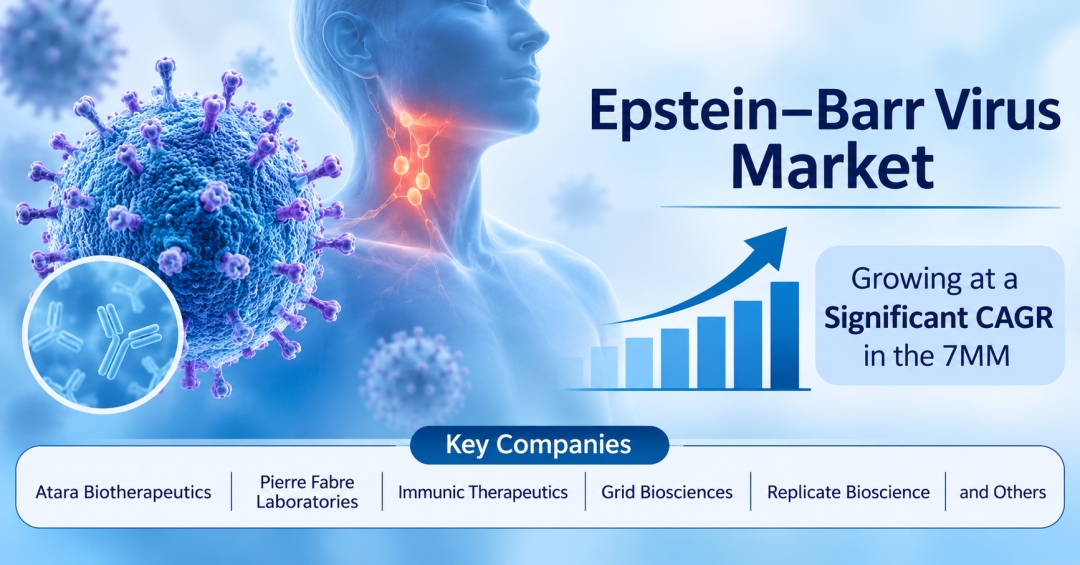
(Albany, US), November 6, 2026 – DelveInsight’s ‘Epstein-Barr Virus (EBV) Market Insights, Epidemiology and Market Forecast – 2036’ report delivers an in-depth understanding of the Epstein-Barr Virus (EBV), historical and forecasted epidemiology, as well as the Epstein-Barr Virus market trends in the United States, EU4 (Germany, Spain, Italy, and France) and the United Kingdom, and Japan.
Explore the intricate details of the Epstein-Barr Virus Market Report @ Epstein-Barr Virus Market Size
Key Takeaways from the Epstein-Barr Virus Market Report
-
In March 2026, Atara Biotherapeutics announced that a Type A meeting with the US Food and Drug Administration (FDA) had been scheduled to discuss the Complete Response Letter (CRL) issued for the Biologics License Application (BLA) of tabelecleucel (tab-cel), which is being developed in partnership with Pierre Fabre Pharmaceuticals.
-
In March 2026, Immunic announced that the European Patent Office (EPO) had granted European patent EP3713554, covering label-relevant dosing regimens for its lead candidate, vidofludimus calcium. The patent is expected to provide protection in Europe through 2038, with the potential for a Supplementary Protection Certificate (SPC) to extend market exclusivity until 2043. A corresponding patent was previously granted by the United States Patent and Trademark Office (USPTO) in 2023.
-
In February 2026, Immunic announced the presentation of additional findings from its Phase II CALLIPER trial, evaluating vidofludimus calcium in patients with progressive multiple sclerosis (PMS), at the Americas Committee for Treatment and Research in Multiple Sclerosis (ACTRIMS).
-
According to DelveInsight’s analysis, the US held the largest EBV market share in 2025, driven by high diagnosis rates, advanced healthcare infrastructure, and strong adoption of emerging and novel treatment approaches.
-
The 2025 Epstein-Barr Virus (EBV) market size in the 7MM was ~USD XXX million and is projected to reach ~USD XXX million by 2036, growing at a CAGR of XX% during 2026-2036.
-
EBV infects around 90% of adults worldwide, with primary infection usually occurring in childhood, and the age of infection varies by geography, race/ethnicity, and socioeconomic factors.
-
According to the Centers for Disease Control and Prevention (CDC), about 9 out of 10 people have been infected with EBV, which spreads easily through saliva and other bodily fluids.
-
There is currently no curative treatment for EBV, and management is mainly supportive, focusing on relief of fever, sore throat, and fatigue through rest, hydration, and pain relievers.
-
Diagnosis relies on a combination of clinical presentation and laboratory testing, including Monospot and EBV-specific serology, which shapes the mononucleosis diagnostic market and its growing role in identifying infection stage and EBV-associated disease.
-
Tabelecleucel (EBVALLO) is the first and currently the only allogeneic T-cell immunotherapy approved by the EMA for relapsed or refractory EBV+ PTLD, although the US FDA issued a Complete Response Letter in January 2026 citing manufacturing deficiencies rather than safety or efficacy concerns.
-
The EBV pipeline is limited, with key candidates such as vidofludimus calcium (IMU-838), mRNA-1189, mRNA-1195, and others focusing on targeted immunotherapy and immune modulation.
-
The leading Epstein-Barr Virus companies include Atara Biotherapeutics, Pierre Fabre Laboratories, Immunic Therapeutics, Grid Biosciences, Replicate Bioscience, and others.
-
Promising Epstein-Barr Virus therapies include Vidofludimus calcium (IMU-838), Ebvax, RBI-5000, and others.
Get a Free sample for the Epstein-Barr Virus Market Forecast, Size & Share Analysis Report @ Epstein Barr Virus Market
Epstein-Barr Virus Overview
Epstein-Barr Virus (EBV) is a highly prevalent herpesvirus that infects nearly 90% of the global adult population and is primarily transmitted through saliva. It often causes asymptomatic or mild infection, especially in childhood, while in adolescents and adults it can lead to infectious mononucleosis (“mono”), a self-limited flu-like illness also known as the “kissing disease.” The virus establishes lifelong latency in the body, can reactivate under certain conditions, and employs several mechanisms of evading the host immune system. EBV has been linked to autoimmune diseases, including systemic lupus erythematosus, multiple sclerosis, rheumatoid arthritis, and Sjögren’s syndrome, as well as malignancies and lymphoproliferative disorders, particularly in immunocompromised individuals. Diagnosis is based on clinical presentation and laboratory testing, including heterophile antibody tests (Monospot) for rapid screening, EBV-specific serology (VCA-IgM, VCA-IgG, EBNA) to determine the stage of infection, and PCR-based assays to detect and quantify EBV DNA in immunocompromised patients. Atypical lymphocytosis and elevated liver enzymes may further support the diagnosis. Growing diagnostic needs continue to shape the mononucleosis diagnostic market size and mononucleosis diagnostic market analysis.
Epstein-Barr Virus Epidemiology Segmentation in the 7MM
-
Total Diagnosed Prevalent Cases of Epstein-Barr Virus
-
Indication-specific Diagnosed Prevalent Cases of Epstein-Barr Virus (EBV)
-
Total Transplant-Eligible Population Infected with Epstein-Barr Virus (EBV)
-
Total Treatable Cases of Epstein-Barr Virus (EBV)
Download the report to understand which factors are driving Epstein-Barr Virus Epidemiology trends @ Epstein-Barr Virus Prevalence
Epstein-Barr Virus Epidemiology Key Findings
-
According to secondary analysis, the overall seroprevalence of EBV for children aged 6–19 in the United States was 66.5%, ranging from 54.1% among 6–8-year-olds to 82.9% among 18–19-year-olds. Males were slightly less likely to be infected than females (64.2% vs. 68.9%).
-
EBV infects up to 95% of adults globally, and prevalence varies by type of EBV and geographic region. EBV type 1 is the most common and is found worldwide, with higher prevalence in Europe, Asia, North America, and South America.
-
EBV resides silently in 19 out of 20 Americans and can cause a small group of immune cells to become abnormal, triggering a widespread immune response against the body’s tissues.
-
More than 99% of patients with multiple sclerosis have been infected with EBV, notably higher than the 90–95% seroprevalence in the general population, and seropositivity in MS is considered to be nearly 100% with improved assay sensitivity and stricter diagnostic criteria.
-
In lupus patients, the fraction of EBV-infected B cells rises to about 1 in 400, a 25-fold difference.
-
A study of over 10 million young adults in the US military, among whom 955 individuals were diagnosed with multiple sclerosis during active duty, reported EBV infection as a pivotal contributor to the disease.
-
In a study of individuals with rheumatoid arthritis undergoing treatment, 43.9% tested positive for anti-EBV EA-DR IgG antibodies, indicating a significant presence of EBV-related antibodies in this population.
Approved Therapies for Epstein-Barr Virus
-
Tabelecleucel (EBVALLO), developed by Atara Biotherapeutics and Pierre Fabre Laboratories, has received marketing authorization in the European Economic Area, the United Kingdom, and Switzerland, and is positioned for EBV+ PTLD, particularly in patients who have failed prior therapies such as rituximab-based treatment.
-
The FDA issued a second CRL on January 9, 2026, rejecting the Biologics License Application (BLA) for adult and pediatric patients with EBV+ PTLD after prior therapy.
Epstein-Barr Virus Pipeline Analysis
-
Vidofludimus calcium (IMU-838): Immunic Therapeutics. An oral small molecule investigational drug being developed as a next-generation treatment for multiple sclerosis and other chronic inflammatory and autoimmune diseases. It has a broad-spectrum antiviral effect that may lower the rate of viral infections and reactivations, including EBV reactivation, potentially slowing EBV-related neurodegenerative processes. It is being tested in the twin Phase III ENSURE trials in relapsing multiple sclerosis and the supportive Phase II CALLIPER trial in progressive multiple sclerosis.
-
Ebvax: Grid Biosciences. A vaccine candidate built on the Ferritin Vehicle platform, with EBV components fused to ferritin to elicit a stronger and more durable immune response than conventional vaccine approaches. It aims to protect against EBV infection and associated conditions such as infectious mononucleosis, EBV-associated cancers, and certain autoimmune diseases, and has not yet received regulatory approval. Candidates like Ebvax are central to the evolving mono vaccine market.
-
RBI-5000: Replicate Bioscience. A preclinical srRNA vaccine containing multiple EBV antigens, being developed for infectious mononucleosis.
Discover more about therapies set to grab Major Epstein-Barr Virus Market Share @ Epstein-Barr Virus Market Drivers and Barriers
Epstein-Barr Virus Market Outlook
The EBV market is largely underdeveloped, with current treatment mainly limited to symptomatic and disease-specific care rather than virus-targeted therapies. In infectious mononucleosis, management is supportive and the illness is typically self-limiting. In chronic active EBV (CAEBV), treatment includes immunosuppressants and hematopoietic stem cell transplantation, the only curative option but one carrying high risk. For EBV-associated malignancies such as Hodgkin lymphoma, nasopharyngeal carcinoma, gastric cancer, and PTLD, therapy relies on chemotherapy, radiation, and immunotherapy (rituximab), targeting the cancer rather than the virus. Tabelecleucel has been approved in Europe for EBV-positive PTLD, marking progress in cell therapy, though global availability remains limited. Despite strong links between EBV and autoimmune diseases like multiple sclerosis and lupus, there are still no EBV-specific treatments.
The future Epstein-Barr virus ebv market is expected to expand with targeted therapies, including EBV-specific T-cell therapy, monoclonal antibodies, and antivirals aimed at viral replication and latency control. Vaccine development is a major transformative opportunity, with nanoparticle-based vaccines in early clinical trials, although vaccine success in preventing conditions like MS and lupus may take many years to confirm. Overall, the launch of first-in-class therapies, improved diagnostic approaches, and increasing disease awareness are expected to drive steady growth in the 7MM EBV market from 2022 to 2036. The market is shifting toward targeted and disease-modifying strategies, including T-cell-based therapies, antivirals, and vaccines, positioning EBV as a high-growth but highly unmet medical need market. Emerging mononucleosis diagnostic market trends, such as PCR-based testing and EBV-specific serology, are further supporting earlier and more accurate identification of disease. As per DelveInsight, the epsteiin barr virus market is therefore evolving from supportive care toward targeted immunotherapy and prevention.
Epstein-Barr Virus Market Drivers
-
Rising EBV prevalence, supported by an aging population and increased immunosuppression-related risk factors (e.g., transplants, cancer therapies)
-
Rising opportunities in targeted immunotherapies, antiviral agents, and vaccine development focused on viral latency and EBV-driven diseases
-
Increasing evidence linking EBV to cancers and autoimmune diseases, expanding opportunities for immune-modulating and disease-modifying treatments
-
Emerging EBV therapies such as Vidofludimus calcium and Ebvax, increasing R&D investment, pipeline activity, and market expansion potential
-
Growing US infected population base, anticipated to increase further by 2036
Epstein-Barr Virus Market Barriers
-
Lack of a preventive vaccine to reduce transmission
-
Absence of curative therapies, with current care mainly supportive
-
Delayed or complex diagnosis due to variable symptoms and need for specialized testing (serology/PCR)
-
Challenges of viral latency and limited early diagnosis tools
-
Limited and scarce pipeline, with few key candidates
Epstein-Barr Virus Treatment Landscape
There is no curative treatment for EBV, and management is primarily supportive. Care focuses on rest, hydration, and symptomatic relief for fever, sore throat, and fatigue, with analgesics and antipyretics commonly used to manage discomfort. In severe cases, such as airway obstruction or significant inflammation, corticosteroids may be prescribed. Antiviral therapies have limited clinical benefit and are not routinely recommended. For serious EBV-associated conditions like PTLD, advanced therapies, including immunotherapy, may be utilized.
To know more about Epstein-Barr Virus Companies working in the treatment market, visit @ Epstein-Barr Virus Market Access and Reimbursement
Scope of the Epstein-Barr Virus Market Report
-
Coverage- 7MM
-
Study Period- 2022-2036
-
Forecast Period- 2026-2036
-
Epstein-Barr Virus Companies- Atara Biotherapeutics, Pierre Fabre Laboratories, Immunic Therapeutics, Grid Biosciences, Replicate Bioscience, and others.
-
Epstein-Barr Virus Therapies- Vidofludimus calcium (IMU-838), Ebvax, RBI-5000, and others.
-
Epstein-Barr Virus Market Dynamics: Epstein-Barr Virus market drivers and market barriers
-
Epstein-Barr Virus Competitive Intelligence Analysis: SWOT Analysis, Conjoint Analysis
-
Epstein-Barr Virus Unmet Needs, KOL Views, Reimbursement
Table of Contents
-
Key Insights
-
Report Introduction
-
Executive Summary
-
Epstein-Barr Virus (EBV) Market Overview at a Glance
-
Epidemiology and Market Forecast Methodology of Epstein-Barr Virus (EBV)
-
Key Events
-
Disease Background and Overview of Epstein-Barr Virus (EBV)
-
Treatment and Management
-
Epidemiology and Patient Population of Epstein-Barr Virus (EBV) in the 7MM
-
Patient Journey
-
Marketed Therapies
-
Emerging Therapies
-
Epstein-Barr Virus (EBV): 7MM Analysis
-
Unmet Needs of Epstein-Barr Virus (EBV)
-
SWOT Analysis of Epstein-Barr Virus (EBV)
-
KOL Views of Epstein-Barr Virus (EBV)
-
Market Access and Reimbursement
-
Appendix
-
DelveInsight Capabilities
-
Disclaimer
-
About DelveInsight
Media Contact
Company Name: DelveInsight Business Research LLP
Contact Person: Abhishek kumar
Email: Send Email
Phone: +19193216187
Address:304 S. Jones Blvd #2432
City: Albany
State: New York
Country: United States
Website: https://www.delveinsight.com/report-store/epstein-barr-virus-ebv-market


